
Piano Magic Notes 7 Music Game
Publishing EaseliveMusic
4.637.00 Reviews
- Version
- 2.2.0
- Installs
- 1.00M
- Age Rating
- Everyone
Screenshots
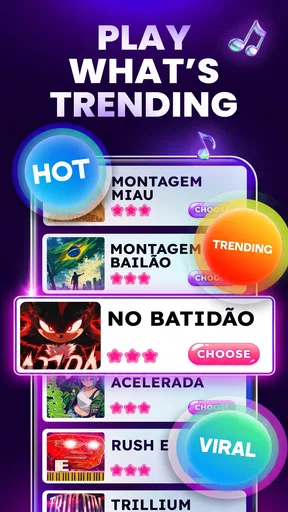
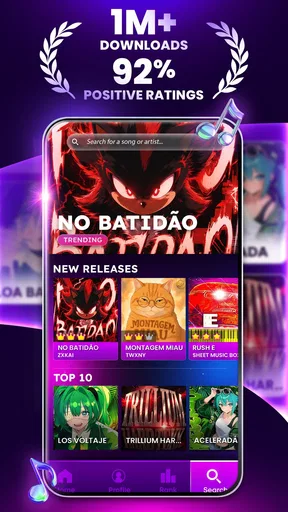

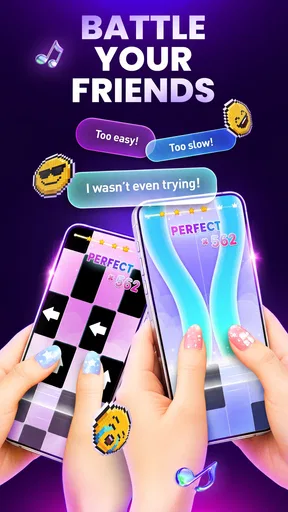


Our Review of Piano Magic Notes 7 Music Game
 Analysis by Appyee
I went into Piano Magic Notes 7 Music Game expecting a familiar tap-the-tiles experience, but I found something more focused than a simple time-killer. Its appeal comes from the way it turns phonk-inspired piano tracks into short bursts of concentration: listen, watch the pattern, and keep your fingers moving without breaking the rhythm. That makes it easy to start, yet surprisingly demanding once the pace rises.
This is a free music game from Publishing Easelive, aimed at players who want immediate action rather than a long tutorial, complicated progression system, or a large story campaign. I think its clearest strength is accessibility. You can pick it up during a short break, play with one hand if the layout allows it, and understand the basic objective almost instantly. At the same time, the fast presentation means it is not equally comfortable for everyone. Players who prefer relaxed rhythm games or precise musical practice may find the experience too repetitive or too visually intense.
What the tapping actually feels like
I focus here on the feel of the tapping, because that is what makes this game either click or become tiring. The useful test is not just whether you can keep up, but whether the pace still feels enjoyable after a few attempts. From there, it’s worth looking at how the game’s focused design compares with other music-game choices.
A simple idea with a demanding rhythm
The central task is straightforward: tap the correct tiles as they arrive in time with the music. The simplicity is useful because it keeps attention on timing rather than menus or instructions. I did not need to spend several minutes learning a control scheme. The challenge comes from maintaining a steady rhythm while the notes arrive more quickly and the track encourages you to react instead of hesitate.
That distinction matters. This is not a piano-learning tool, even though its presentation uses piano notes and melodies. The tiles represent a game pattern, not a lesson in reading music or playing an instrument. I would recommend it to someone who enjoys rhythm-based reflex tests, but not to a beginner looking for finger exercises that transfer directly to a real keyboard.
The phonk influence gives the game a sharper personality than a traditional soft piano app. The music feels designed to push the player forward, and that works well when I want a quick energy boost. It is less suitable when I am looking for calm background play. The sound and visual pace are part of the attraction, but they can also make mistakes feel more frustrating during longer sessions.
Why the first few sessions are effective
The game’s strongest design choice is its low barrier to entry. A new player can understand the interaction from the first attempt, while a more experienced rhythm-game fan can immediately focus on accuracy and reaction speed. This makes it a convenient choice for filling small gaps in the day: waiting for transport, taking a brief screen break, or switching away from a slower game.
I also like that the format encourages short sessions naturally. A rhythm attempt demands concentration, so I rarely feel the need to play indefinitely. That can be a positive alternative to endless scrolling. Instead of passively consuming content, I am actively following a beat and trying to keep a clean run together.
One practical tip is to begin with the sound at a comfortable level and use the visual movement as a second cue rather than relying on sight alone. When the track becomes busy, reacting only to the tiles can make the game feel frantic. Listening for the beat first helps me anticipate the next tap, while watching the lane confirms where the note is going. This is a small adjustment, but it makes the experience feel more controlled.
Where it fits among music games
Compared with music games built around character collections, story chapters, or elaborate performance systems, this one is much more direct. There is less to manage between attempts, which is ideal if I want to play immediately. It also avoids the learning curve of games that ask players to handle several lanes, hold notes, swipe patterns, or layered controls from the beginning.
That simplicity is also the main trade-off. Players who enjoy deep customization, social competition, or a broad catalog of play styles may find the format narrow. A dedicated rhythm title with multiple input types would offer more variety, while a conventional piano simulator would be better for experimenting with melodies. This game sits in the middle: it borrows the visual language of piano tiles but behaves primarily like a fast reflex challenge.
For me, that middle ground works when I treat it as an arcade game with music at its center. It does not need to replace a full rhythm-game collection. It works better as the quick, uncomplicated option I open when I want a few energetic attempts without committing to a larger session.
The importance of touch and attention
Because the core action depends on tapping accurately, the physical feel of the device matters. A phone with a responsive touchscreen makes the game easier to enjoy, while a device that occasionally misses taps can turn a fair challenge into an annoying one. I would also avoid playing while walking or doing another task. The game may look casual, but the faster sections require enough attention that divided focus quickly shows.
Screen size can change the experience too. On a smaller display, the action may feel compact and immediate, but it can be harder to distinguish nearby tiles during a fast sequence. On a larger phone or tablet, the pattern is easier to read, although reaching across the screen may feel less natural. I would test the game in portrait and landscape if the device supports both comfortably, then keep the orientation that gives the clearest view and least finger strain.
Another useful habit is to play with clean, dry hands and avoid tapping with a fingertip that is already tired. That sounds obvious, but rhythm games magnify tiny inconsistencies. When I start missing notes repeatedly, the problem is not always the song’s speed; sometimes I have simply lost concentration or am holding the phone awkwardly.
What I found rewarding after the novelty faded
The initial enjoyment comes from learning the basic timing, but the longer-term appeal depends on improving consistency. A successful run feels satisfying because it reflects attention rather than luck. I found it more rewarding to focus on reducing careless mistakes than on rushing into the hardest-looking sequence. That approach also makes the game friendlier for players who are still developing rhythm-game habits.
A good personal routine is to use the first attempt as a warm-up, the next attempt to concentrate on the beat, and a later attempt to test speed. This creates a small progression even when I am only playing for a few minutes. It also prevents the common mistake of treating every failure as evidence that the game is unfair. Sometimes the better solution is simply to settle into the song before chasing a cleaner performance.
The game is especially enjoyable with headphones when I want the beat to stand out from surrounding noise. In a quiet room, the device speaker may be enough for a casual round. In a busy environment, however, competing sounds can make timing less reliable. I would not judge the game solely on a distracted first attempt; rhythm titles are unusually sensitive to where and how they are played.
The meaningful limitation: repetition and pressure
My biggest reservation is that the same basic interaction can begin to feel repetitive. Tapping tiles is immediately understandable, but it does not provide the variety of a game with exploration, puzzles, or several distinct control systems. If the music does not keep a player interested, there may be little else to carry the experience for a long session.
The high-speed format can also create pressure rather than fun. Some players enjoy that tension, while others prefer a rhythm game that lets them make mistakes without ending the attempt so quickly. If you have sensitive eyes, dislike rapid visual movement, or find repeated tapping uncomfortable, I would approach this as a short-session game rather than something to play continuously.
That limitation does not make it a poor choice; it clarifies the right use. I would not install it expecting a complete musical hobby or a deep competitive platform. I would install it for quick, energetic rounds and accept that its appeal depends heavily on enjoying the music style and the satisfaction of accurate tapping.
Who should try it, and who should skip it
I think it is a strong match for casual players who like music-driven arcade games, fans of phonk-flavored tracks, and anyone who wants an uncomplicated challenge that starts immediately. It is also a reasonable choice for families because the content rating is Everyone, although younger players may still benefit from sensible limits on screen time and volume.
It may suit someone who normally avoids complex games. There is no need to memorize a large set of commands before playing, and the basic goal is easy to explain to a friend. That makes it a good “pass the phone around” option, provided each person is comfortable with rapid tapping and the device responds reliably.
I would suggest skipping it if your main goal is to learn piano, compose music, or practice sheet reading. The game’s piano theme should not be confused with instrument instruction. I would also point fans of long-form rhythm games toward a richer alternative if they need multiple modes, deeper progression, or more control over the music experience. This title is at its best when its narrow focus feels refreshing rather than limiting.
Practical details before installing
The game is free, which lowers the risk of trying it for a few rounds. It has reached over a million installs and holds a 4.9 average from around six thousand ratings, so there is clear interest from players who enjoy this style. I treat those figures as a sign that the basic formula connects with its audience, not as a guarantee that every player will enjoy the fast pace.
It is listed for Everyone and works on Android 7.0 or later. The current version is 2.1.0, and the game was released on August 13, 2025. Those details make it accessible to many Android users, including people who keep an older phone for casual gaming. Before starting a serious session, I would still check that the device has enough battery and that notifications are muted, because an interruption during a fast sequence is particularly irritating.
The developer is Publishing Easelive, and the game’s presentation stays centered on its music-tapping identity. I appreciate that focused direction. There is no need to pretend this is a broad entertainment platform: its value comes from making one compact activity easy to begin and satisfying to repeat for a while.
My verdict after using it as a quick daily game
In everyday use, I see Piano Magic Notes 7 Music Game as a compact rhythm challenge rather than a full piano experience. On a short break, it gives me something active to do without demanding a long setup. After several attempts, I usually know whether I am in the mood to keep chasing cleaner timing or put it away, which is a healthier fit for brief play than a game designed to occupy an entire evening.
The best evidence in its favor is how quickly the simple tapping turns into genuine concentration. The strongest weakness is that the same simplicity can limit variety, especially for players who want progression beyond faster or more demanding patterns. That balance is important: the game succeeds because it does not overcomplicate its central idea, but it also cannot escape the boundaries of that idea.
My recommendation is clear: try it if you want free, fast music-game sessions built around piano-style tiles and energetic beats. Keep your expectations realistic, use headphones when timing is difficult, play in short rounds, and do not choose it as a substitute for piano lessons or a deep rhythm-game system. For the right player, its focused design is a strength; for everyone else, it may feel like a polished idea that runs out of room sooner than expected.
After weighing both sides, I would keep it installed as a quick arcade option, especially for moments when I want a burst of sound and concentration rather than a complicated game. It is easy to understand, demanding enough to reward practice, and specific enough to stand apart from a basic piano simulator. Just remember what it is: a fast tile-tapping music game, and a good one when that is exactly what you want.
Verdict
Strengths of Piano Magic Notes 7 Music Game
- Simple tap controls make it easy for beginners to start playing.
- Wide song selection offers variety for different musical tastes.
- Short levels are convenient for quick gaming sessions.
- Fast-paced gameplay can improve timing and hand-eye coordination.
- Bright visuals and sound effects make each performance feel lively.
Limitations of Piano Magic Notes 7 Music Game
- Later songs can become difficult and require quick, precise taps.
- Some content may be locked behind ads or in-app purchases.
- Frequent ads can interrupt the flow between songs or attempts.
- Gameplay may feel repetitive if you prefer deeper rhythm mechanics.
- Requires steady focus, which may be frustrating for younger players.
Similar Picks in This Category
View All
Tiles Hop Music & Ball Game
AMANOTES PTE. LTD.4.3

Magic Tiles 3™ - Piano Game
AMANOTES PTE. LTD.4.6

Real Piano
Bilkon3.7

Piano Game: Classic Music Song
Dream Tiles Piano Game Studio4.0

Smash Colors: Music Ball Rush
BADSNOWBALL HONGKONG LIMITED4.2

Piano Music Go-EDM Piano Games
Joy Journey Music Games4.5
Frequently Asked Questions
What is Piano Magic Notes 7 Music Game?
Piano Magic Notes 7 Music Game is a rhythm-based mobile game in which you tap piano-style notes as they appear on the screen. The objective is to follow the music accurately, maintain your combo, and avoid missing notes. It is designed for short, fast-paced sessions and offers a simple control system that beginners can understand quickly while still requiring concentration and timing to achieve higher scores.
How do you play Piano Magic Notes 7 Music Game?
Gameplay is based on tapping the correct notes in time with the selected song. Notes usually move toward a target area, and you must touch them at the right moment to keep the melody going. Accurate taps increase your score and may extend a combo, while missed or incorrectly tapped notes can reduce your progress. Headphones and a steady rhythm can make timing easier.
Is Piano Magic Notes 7 Music Game free to download and play?
The game can generally be downloaded without an upfront purchase, but the exact availability of advertisements, optional purchases, or other monetization features may depend on the version and platform. Players should check the app store listing before installing, especially if they want to know whether extra songs, lives, visual items, or ad removal require payment.
Does Piano Magic Notes 7 Music Game require an internet connection?
Some parts of Piano Magic Notes 7 Music Game may work offline after installation, particularly basic gameplay that uses content already stored on the device. However, an internet connection may be needed for downloading songs, loading advertisements, synchronizing progress, receiving updates, or accessing online features. Requirements can vary between versions, so checking the store description is recommended before relying on offline play.
Is Piano Magic Notes 7 Music Game suitable for children and beginners?
The straightforward tap controls make Piano Magic Notes 7 Music Game accessible to beginners, including players who have little or no musical experience. Difficulty can increase as songs become faster, so younger users may need time to develop better timing and coordination. Parents should also review the app’s age rating, advertising, privacy information, and any optional in-app purchases before allowing children to play.
Play our best games!


